Statement by SLAJ President, Ahmed Sahid Nasralla, at WIMSAL Annual General Meeting 2023, Friday 10th March 2023 at Atlantic Hotel, Lumley Beach, Freetown at 10:00AM
Statement by SLAJ President, Ahmed Sahid Nasralla, at WIMSAL Annual General Meeting 2023, Friday 10th March 2023 at Atlantic Hotel, Lumley Beach, Freetown at 10:00AM

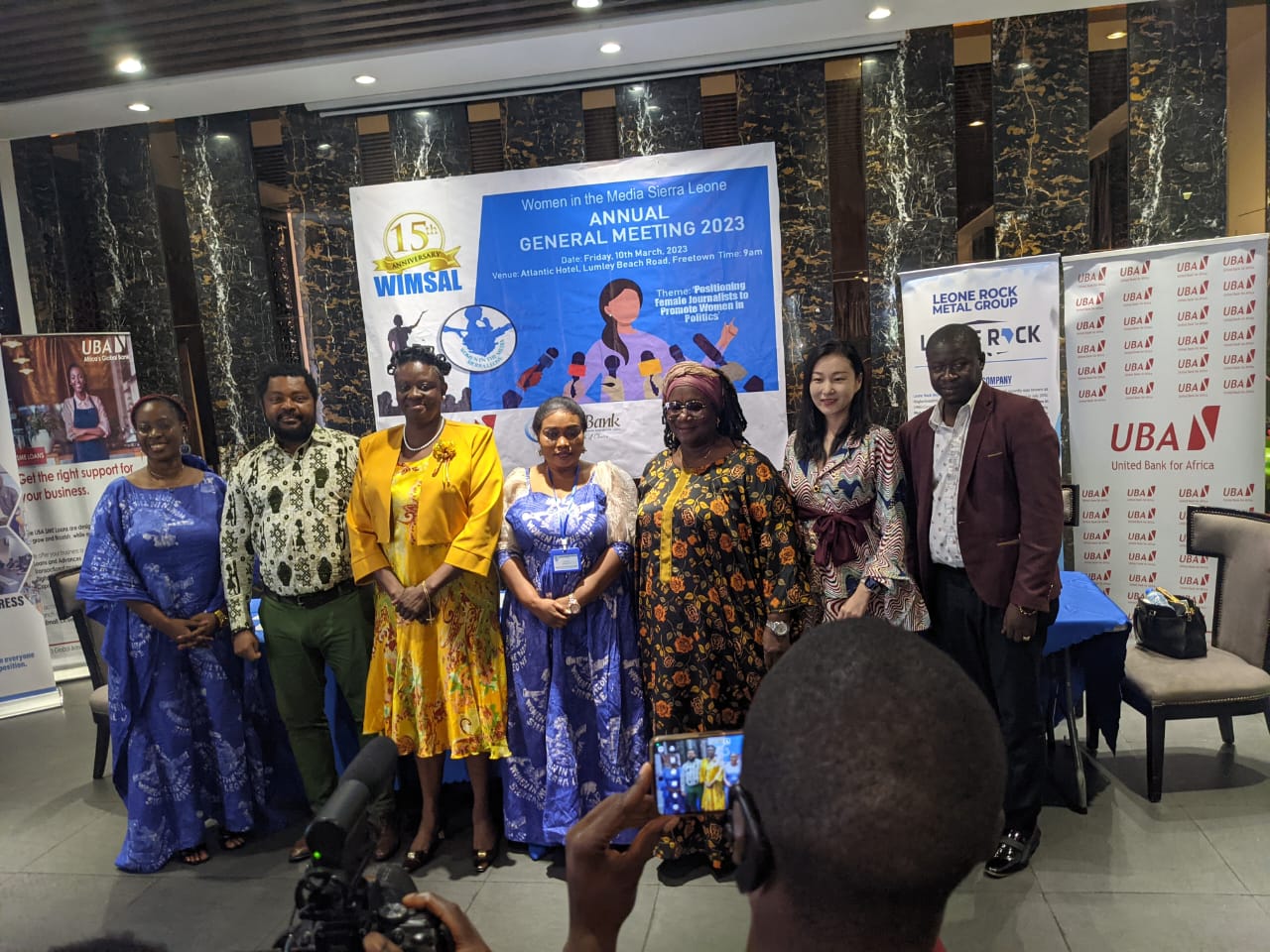 Theme: ‘Positioning Female Journalists to Promote Women in Politics’.
Opening courtesies…
Let me start with congratulating WIMSAL on your 15th Anniversary.
It's an honour to be here today at the Women in the Media in Sierra Leone Annual General Meeting to discuss the theme of "Positioning Female Journalists to Promote Women in Politics."
In Sierra Leone, women are underrepresented in both politics and the media. According to the Inter-Parliamentary Union, only 13.1% of seats in the Sierra Leonean parliament are held by women. This is despite the fact that women make up over 50% of the country's population. Similarly, the Global Media Monitoring Project found that only 24% of news stories in Sierra Leone feature women as protagonists or experts.
These statistics are troubling and highlight the need for greater representation of women in both politics and the media. We need more female journalists to participate in shaping public opinion and influencing political discourse.
However, female journalists themselves face many challenges and barriers that prevent them from fully participating in this process.
According to a survey conducted by the International Women's Media Foundation, 64% of female journalists in Sierra Leone reported experiencing gender-based violence in the workplace. This includes verbal abuse, physical assault, and sexual harassment.
These forms of violence not only harm individual journalists but also have a chilling effect on women's participation in the media. It's difficult to feel motivated to speak up and share your opinions when you know you may face abuse or violence for doing so.
So, what can we do to address these challenges and promote women's participation in politics and the media?
First, we need to provide training and resources to female journalists to help them build their skills and expertise. This includes training in areas such as digital media, investigative journalism, and conflict reporting. By providing these resources, we can help female journalists to advance their careers and become leaders in their fields.
Second, we need to create safe and supportive working environments that allow women to thrive and reach their full potential. This includes implementing policies and procedures to prevent and address gender-based violence in the workplace. It also means providing support for women who experience harassment or discrimination.
Third, we need to work to change cultural attitudes towards women in both politics and the media. This means challenging gender stereotypes and promoting positive representations of women in the media. It also means supporting women who choose to enter politics and breaking down the structural barriers that prevent them from doing so.
Positioning female journalists to promote women in politics is an important step towards increasing women's representation and participation in politics. Female journalists can play a critical role in promoting women in politics by highlighting the achievements and contributions of female politicians, challenging gender biases and stereotypes, and providing a platform for women's voices to be heard.
Theme: ‘Positioning Female Journalists to Promote Women in Politics’.
Opening courtesies…
Let me start with congratulating WIMSAL on your 15th Anniversary.
It's an honour to be here today at the Women in the Media in Sierra Leone Annual General Meeting to discuss the theme of "Positioning Female Journalists to Promote Women in Politics."
In Sierra Leone, women are underrepresented in both politics and the media. According to the Inter-Parliamentary Union, only 13.1% of seats in the Sierra Leonean parliament are held by women. This is despite the fact that women make up over 50% of the country's population. Similarly, the Global Media Monitoring Project found that only 24% of news stories in Sierra Leone feature women as protagonists or experts.
These statistics are troubling and highlight the need for greater representation of women in both politics and the media. We need more female journalists to participate in shaping public opinion and influencing political discourse.
However, female journalists themselves face many challenges and barriers that prevent them from fully participating in this process.
According to a survey conducted by the International Women's Media Foundation, 64% of female journalists in Sierra Leone reported experiencing gender-based violence in the workplace. This includes verbal abuse, physical assault, and sexual harassment.
These forms of violence not only harm individual journalists but also have a chilling effect on women's participation in the media. It's difficult to feel motivated to speak up and share your opinions when you know you may face abuse or violence for doing so.
So, what can we do to address these challenges and promote women's participation in politics and the media?
First, we need to provide training and resources to female journalists to help them build their skills and expertise. This includes training in areas such as digital media, investigative journalism, and conflict reporting. By providing these resources, we can help female journalists to advance their careers and become leaders in their fields.
Second, we need to create safe and supportive working environments that allow women to thrive and reach their full potential. This includes implementing policies and procedures to prevent and address gender-based violence in the workplace. It also means providing support for women who experience harassment or discrimination.
Third, we need to work to change cultural attitudes towards women in both politics and the media. This means challenging gender stereotypes and promoting positive representations of women in the media. It also means supporting women who choose to enter politics and breaking down the structural barriers that prevent them from doing so.
Positioning female journalists to promote women in politics is an important step towards increasing women's representation and participation in politics. Female journalists can play a critical role in promoting women in politics by highlighting the achievements and contributions of female politicians, challenging gender biases and stereotypes, and providing a platform for women's voices to be heard.
 Here are some strategies that can be used to position female journalists to promote women in politics:
Encourage diversity in newsrooms: Newsrooms should strive to hire more female journalists and ensure that women are represented in decision-making positions. This can help to create a culture that values diverse perspectives and promotes gender equality.
Provide training and resources: Female journalists should be provided with training and resources that help them to understand the unique challenges faced by women in politics and how to effectively report on these issues. This can include workshops on gender-sensitive reporting and mentorship programs that connect female journalists with experienced political reporters.
Highlight success stories: Female journalists can highlight the successes of women in politics by profiling female politicians and their achievements. This can help to counteract negative stereotypes and biases that are often associated with women in politics. This means also shining a spotlight on women who have broken barriers and achieved success in their political careers.
Include more women in political coverage: Female journalists can make a conscious effort to include more women in their political coverage. This means seeking out female politicians for interviews, quoting more female experts in political stories, and featuring more stories about women's political issues.
Challenge gender biases: Female journalists can challenge gender biases by asking tough questions and holding male and female politicians to the same standards. This can help to create a more level playing field for women in politics.
Encourage women to run for office: Female journalists can also play a role in encouraging more women to run for office. This means featuring stories about successful female politicians who can serve as role models, and providing information and resources to women who are interested in entering politics.
Amplify women's voices: Female journalists can provide a platform for women's voices to be heard by interviewing female politicians, experts, and activists on issues related to gender equality and women's participation in politics.
By taking these steps, female journalists can help to promote women in politics and increase their representation in government at all levels.
By positioning female journalists to promote women in politics, we can work towards creating a more equitable and inclusive political system that reflects the diversity of our society.
Safety and security
Promoting the safety and security of female journalists is crucial to ensuring that they can carry out their work without fear of harassment, intimidation, or violence.
In these elections, SLAJ and its partners will train Female journalists on safety and security protocols, including how to recognize and respond to potential risks and threats, as well as how to protect their digital and physical safety.
We will collaborate with local authorities to establish safety protocols and emergency response plans in case of threats or attacks.
We will collaborate with the Sierra Leone Bar Association to advocate for legal protections that address harassment, intimidation, and violence against journalists, including gender-based violence.
We will also work on creating support networks for female journalists to provide a safe space for sharing experiences, building solidarity, and accessing resources to address safety concerns.
We will train journalists on gender-sensitive reporting and encourage a diverse range of voices, avoiding stereotypes, and highlighting the experiences and perspectives of women.
Empowering women in leadership positions within media organizations can also help to promote a culture of safety and security for female journalists, and create a more inclusive and equitable workplace.
Role models
There are many examples of successful women in politics and the media who can serve as role models for young women in Sierra Leone.
Paramount Chief Ella Koblo Gulama OBE, GCOR. She was a Paramount Chief and politician. In 1957, she became the first elected female Member of Parliament in Sierra Leone. She was re-elected in 1962. She was a trailblazer who paved the way for future generations of women to follow.
Sunkarie Kamara- the First Female Mayor of Makeni City, Sierra Leone.
Haja Zainab Hawa Bangura- probably the first woman to register and lead a political party in Sierra Leone; now works at the UN.
Dr. Sylvia Olayinka Blyden (OOR)- a journalist and a politician. The first woman to establish and edit a ‘daily newspaper’ in Sierra Leone and held her head high in a male-dominated profession. (The first woman to publish a newspaper in Sierra Leone was Diasy Bona).
Similarly, there are many successful female journalists in Sierra Leone who are breaking down barriers and making a difference in their communities. Women journalists who are using their platforms to promote gender equality and raise awareness about issues affecting women and girls: Yeama Thompson through IMDEV, Asmaa James through AJ Foundation, Femi Coker through Women’s Voice, Millicent Kargbo through SLAWIJ; Mariama Khai Fornah through training of journalists across the country; Dr. Williette P.R.O James through tertiary education, training and mentorship.
And I always mention Mrs. Bernadette Cole and Daisy Bona and their place in the history of the media and SLAJ in Sierra Leone. You should be inspired. You should be motivated.
However, let me hasten to caution that your promotion of women in politics should not be selective and bias. If you promote and advocate for the safety and security of Dr. Sylvia Blyden OOR, you must do likewise for Her Worship Mayor Aki Sawyer.
If you promote and advocate for the safety and security of Fatmata Sawaneh you must do same for Femi Claudius Cole.
In the promotion of women in politics and in the media, there should be no discrimination along party or regional lines. There should be unity and you speak with one voice.
In conclusion, we have a lot of work to do to promote women's political participation and representation in the media. By supporting and empowering female journalists, we can help to create a more inclusive and equitable media landscape that reflects the diversity of Sierra Leonean society. Let us commit ourselves to this important task and work together to make it a reality.
So, as you review your activities and financial performance of WIMSAL over the past year, elect new members to the executive board, and discuss plans for the future, let this AGM provide an opportunity for members to have a voice in the direction of the organization and ensure that it continues to meet the needs and aspirations of its members and fulfill its mission.
Finally, I say thank you to the outgoing Executive of Femi Coker and congratulations to the new Executive.
Please focus on your goal. Do not compete with SLAWIJ. You are not rivals and you are not in competition. Focus on what WIMSAL can achieve under your tenure and ensure the Association takes its rightful place in the media landscape in Sierra Leone.
I wish you all the best.
Thank you.
Here are some strategies that can be used to position female journalists to promote women in politics:
Encourage diversity in newsrooms: Newsrooms should strive to hire more female journalists and ensure that women are represented in decision-making positions. This can help to create a culture that values diverse perspectives and promotes gender equality.
Provide training and resources: Female journalists should be provided with training and resources that help them to understand the unique challenges faced by women in politics and how to effectively report on these issues. This can include workshops on gender-sensitive reporting and mentorship programs that connect female journalists with experienced political reporters.
Highlight success stories: Female journalists can highlight the successes of women in politics by profiling female politicians and their achievements. This can help to counteract negative stereotypes and biases that are often associated with women in politics. This means also shining a spotlight on women who have broken barriers and achieved success in their political careers.
Include more women in political coverage: Female journalists can make a conscious effort to include more women in their political coverage. This means seeking out female politicians for interviews, quoting more female experts in political stories, and featuring more stories about women's political issues.
Challenge gender biases: Female journalists can challenge gender biases by asking tough questions and holding male and female politicians to the same standards. This can help to create a more level playing field for women in politics.
Encourage women to run for office: Female journalists can also play a role in encouraging more women to run for office. This means featuring stories about successful female politicians who can serve as role models, and providing information and resources to women who are interested in entering politics.
Amplify women's voices: Female journalists can provide a platform for women's voices to be heard by interviewing female politicians, experts, and activists on issues related to gender equality and women's participation in politics.
By taking these steps, female journalists can help to promote women in politics and increase their representation in government at all levels.
By positioning female journalists to promote women in politics, we can work towards creating a more equitable and inclusive political system that reflects the diversity of our society.
Safety and security
Promoting the safety and security of female journalists is crucial to ensuring that they can carry out their work without fear of harassment, intimidation, or violence.
In these elections, SLAJ and its partners will train Female journalists on safety and security protocols, including how to recognize and respond to potential risks and threats, as well as how to protect their digital and physical safety.
We will collaborate with local authorities to establish safety protocols and emergency response plans in case of threats or attacks.
We will collaborate with the Sierra Leone Bar Association to advocate for legal protections that address harassment, intimidation, and violence against journalists, including gender-based violence.
We will also work on creating support networks for female journalists to provide a safe space for sharing experiences, building solidarity, and accessing resources to address safety concerns.
We will train journalists on gender-sensitive reporting and encourage a diverse range of voices, avoiding stereotypes, and highlighting the experiences and perspectives of women.
Empowering women in leadership positions within media organizations can also help to promote a culture of safety and security for female journalists, and create a more inclusive and equitable workplace.
Role models
There are many examples of successful women in politics and the media who can serve as role models for young women in Sierra Leone.
Paramount Chief Ella Koblo Gulama OBE, GCOR. She was a Paramount Chief and politician. In 1957, she became the first elected female Member of Parliament in Sierra Leone. She was re-elected in 1962. She was a trailblazer who paved the way for future generations of women to follow.
Sunkarie Kamara- the First Female Mayor of Makeni City, Sierra Leone.
Haja Zainab Hawa Bangura- probably the first woman to register and lead a political party in Sierra Leone; now works at the UN.
Dr. Sylvia Olayinka Blyden (OOR)- a journalist and a politician. The first woman to establish and edit a ‘daily newspaper’ in Sierra Leone and held her head high in a male-dominated profession. (The first woman to publish a newspaper in Sierra Leone was Diasy Bona).
Similarly, there are many successful female journalists in Sierra Leone who are breaking down barriers and making a difference in their communities. Women journalists who are using their platforms to promote gender equality and raise awareness about issues affecting women and girls: Yeama Thompson through IMDEV, Asmaa James through AJ Foundation, Femi Coker through Women’s Voice, Millicent Kargbo through SLAWIJ; Mariama Khai Fornah through training of journalists across the country; Dr. Williette P.R.O James through tertiary education, training and mentorship.
And I always mention Mrs. Bernadette Cole and Daisy Bona and their place in the history of the media and SLAJ in Sierra Leone. You should be inspired. You should be motivated.
However, let me hasten to caution that your promotion of women in politics should not be selective and bias. If you promote and advocate for the safety and security of Dr. Sylvia Blyden OOR, you must do likewise for Her Worship Mayor Aki Sawyer.
If you promote and advocate for the safety and security of Fatmata Sawaneh you must do same for Femi Claudius Cole.
In the promotion of women in politics and in the media, there should be no discrimination along party or regional lines. There should be unity and you speak with one voice.
In conclusion, we have a lot of work to do to promote women's political participation and representation in the media. By supporting and empowering female journalists, we can help to create a more inclusive and equitable media landscape that reflects the diversity of Sierra Leonean society. Let us commit ourselves to this important task and work together to make it a reality.
So, as you review your activities and financial performance of WIMSAL over the past year, elect new members to the executive board, and discuss plans for the future, let this AGM provide an opportunity for members to have a voice in the direction of the organization and ensure that it continues to meet the needs and aspirations of its members and fulfill its mission.
Finally, I say thank you to the outgoing Executive of Femi Coker and congratulations to the new Executive.
Please focus on your goal. Do not compete with SLAWIJ. You are not rivals and you are not in competition. Focus on what WIMSAL can achieve under your tenure and ensure the Association takes its rightful place in the media landscape in Sierra Leone.
I wish you all the best.
Thank you.
Comments
Post a Comment